Street Walking: Help Them Promote You

Facebook does it.

Twitter does it.

Google Plus and LinkedIn do it, too.

What do they do? They have badges that their members can easily embed on their own sites to help increase their following on the various social networks.

Badges are relatively easy to create as long as you know some basic HTML. There are several benefits to creating a badge and having others post it on their sites, including:

  • Increased brand recognition
  • External backlinks to your site
  • Exposure to a wide ranging audience
  • Increased traffic to your site

There are many reasons you can use to create a badge and ask others to place it on their sites.

At the Bonfire, we have badges that our members can create and embed on their sites to increase their following on the community. The badges also help us increase our brand recognition and referral traffic.

Here’s an example of our badge:
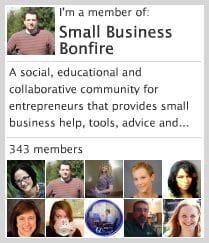
Bonfire contributor Emily Suess created a badge to help promote her writing contest and asked her readers to place it on their sites.

So, as you can see, there are many different reasons to create an embeddable badge. How have you used badges? Have they helped with increasing your following or driving more traffic to your site?

Image credit: nem_youth

Picture of Chaz Michaels

Chaz Michaels

TRENDING AROUND THE WEB

beehiiv’s 2026 benchmark data shows a median newsletter converts well under one percent of free subscribers into paying ones, while Substack still discloses no comparable conversion figures of its own, a transparency gap that creators researching where to launch a new paid newsletter are only now starting to take seriously

beehiiv’s 2026 benchmark data shows a median newsletter converts well under one percent of free subscribers into paying ones, while Substack still discloses no comparable conversion figures of its own, a transparency gap that creators researching where to launch a new paid newsletter are only now starting to take seriously

The Blog Herald

Greif and Gleason’s 1980 research on how children learn politeness routines found that young children almost never say “please” or “thank you” spontaneously, they say it because a parent prompts them with “what do you say?” dozens of times a week, meaning the reflex adults later display without thinking twice was built through years of someone else’s prompting long before it became automatic.

Greif and Gleason’s 1980 research on how children learn politeness routines found that young children almost never say “please” or “thank you” spontaneously, they say it because a parent prompts them with “what do you say?” dozens of times a week, meaning the reflex adults later display without thinking twice was built through years of someone else’s prompting long before it became automatic.

Global English Editing

AI answer boxes are reportedly wiping out a majority of organic search traffic for some blog categories in 2026 — while others have barely lost a visitor, and the split comes down to one thing

AI answer boxes are reportedly wiping out a majority of organic search traffic for some blog categories in 2026 — while others have barely lost a visitor, and the split comes down to one thing

The Blog Herald

Many adult children remember watching a father work sixty-hour weeks for decades so the family could have what he never did, then watched him die in his sixties without ever prioritizing his own happiness, and now see that same pattern quietly repeating in their own lives, under a different name.

Many adult children remember watching a father work sixty-hour weeks for decades so the family could have what he never did, then watched him die in his sixties without ever prioritizing his own happiness, and now see that same pattern quietly repeating in their own lives, under a different name.

Global English Editing

Eye tracking research on how people actually read web pages found that most visitors scan in a rough F shaped pattern down the left side of the screen, which is why professional editors front load the real information instead of slowly building up to it

Eye tracking research on how people actually read web pages found that most visitors scan in a rough F shaped pattern down the left side of the screen, which is why professional editors front load the real information instead of slowly building up to it

The Blog Herald

Harvard researchers had 166 undergraduates rate their own pets on qualities like thoughtful, considerate and sympathetic, and the students who felt most chronically disconnected from other people scored their pets meaningfully higher on exactly those three traits, and no others.

Harvard researchers had 166 undergraduates rate their own pets on qualities like thoughtful, considerate and sympathetic, and the students who felt most chronically disconnected from other people scored their pets meaningfully higher on exactly those three traits, and no others.

Global English Editing

Subscribe to receive our latest articles!

Get updates on the latest posts and more from Small Business Bonfire straight to your inbox.