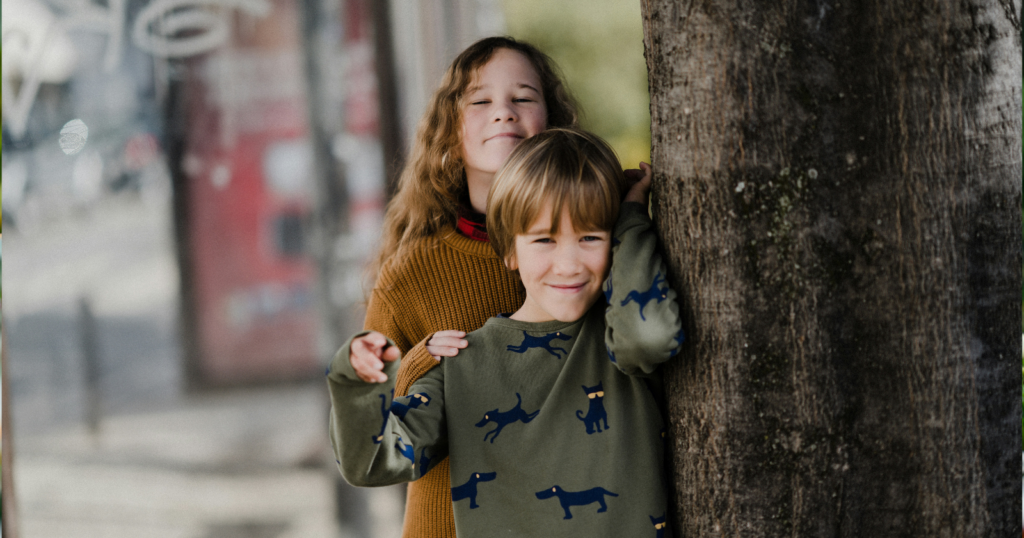
Street Walking: Dressing Like Dolls

So, you’re a mom perusing the Kohl’s website for a Christmas dress for your daughter’s beloved doll. After surfing around, you find the perfect dress for the doll. They even have a matching one for your daughter.

The thing is, you already have a Christmas dress for your daughter. But…this is the perfect dress for her doll. And they are only sold as a pair, so you have to buy both. The price doesn’t even matter because that smile on your daughter’s face will be worth it.

This is exactly what Kohl’s and Dollie & Me are betting on. You want your daughter to be happy. Sure, you might find less expensive dresses for both her and her doll, but they would not match. And they certainly wouldn’t make her smile like matching outfits would.

What can you do with your products and services to create a similar dilemma for your customers?

Like all of our other marketing examples, make sure you bookmark this for future reference and inspiration.

Submit a Photo

Street Walking is a weekly series that includes a photo showing poor marketing, exceptional marketing or something in between. If you have a marketing example you saw on the street that you’d like us to include in a future post, you can submit your photo here.

Picture of Chaz Michaels

Chaz Michaels

TRENDING AROUND THE WEB

beehiiv’s 2026 benchmark data shows a median newsletter converts well under one percent of free subscribers into paying ones, while Substack still discloses no comparable conversion figures of its own, a transparency gap that creators researching where to launch a new paid newsletter are only now starting to take seriously

beehiiv’s 2026 benchmark data shows a median newsletter converts well under one percent of free subscribers into paying ones, while Substack still discloses no comparable conversion figures of its own, a transparency gap that creators researching where to launch a new paid newsletter are only now starting to take seriously

The Blog Herald

Greif and Gleason’s 1980 research on how children learn politeness routines found that young children almost never say “please” or “thank you” spontaneously, they say it because a parent prompts them with “what do you say?” dozens of times a week, meaning the reflex adults later display without thinking twice was built through years of someone else’s prompting long before it became automatic.

Greif and Gleason’s 1980 research on how children learn politeness routines found that young children almost never say “please” or “thank you” spontaneously, they say it because a parent prompts them with “what do you say?” dozens of times a week, meaning the reflex adults later display without thinking twice was built through years of someone else’s prompting long before it became automatic.

Global English Editing

AI answer boxes are reportedly wiping out a majority of organic search traffic for some blog categories in 2026 — while others have barely lost a visitor, and the split comes down to one thing

AI answer boxes are reportedly wiping out a majority of organic search traffic for some blog categories in 2026 — while others have barely lost a visitor, and the split comes down to one thing

The Blog Herald

Many adult children remember watching a father work sixty-hour weeks for decades so the family could have what he never did, then watched him die in his sixties without ever prioritizing his own happiness, and now see that same pattern quietly repeating in their own lives, under a different name.

Many adult children remember watching a father work sixty-hour weeks for decades so the family could have what he never did, then watched him die in his sixties without ever prioritizing his own happiness, and now see that same pattern quietly repeating in their own lives, under a different name.

Global English Editing

Eye tracking research on how people actually read web pages found that most visitors scan in a rough F shaped pattern down the left side of the screen, which is why professional editors front load the real information instead of slowly building up to it

Eye tracking research on how people actually read web pages found that most visitors scan in a rough F shaped pattern down the left side of the screen, which is why professional editors front load the real information instead of slowly building up to it

The Blog Herald

Harvard researchers had 166 undergraduates rate their own pets on qualities like thoughtful, considerate and sympathetic, and the students who felt most chronically disconnected from other people scored their pets meaningfully higher on exactly those three traits, and no others.

Harvard researchers had 166 undergraduates rate their own pets on qualities like thoughtful, considerate and sympathetic, and the students who felt most chronically disconnected from other people scored their pets meaningfully higher on exactly those three traits, and no others.

Global English Editing

Subscribe to receive our latest articles!

Get updates on the latest posts and more from Small Business Bonfire straight to your inbox.